
Spring tryouts are exciting.
Then you find last year’s sports bra in the back of a drawer.
If she’s headed into high-impact practices like track or soccer, that “old favorite” can turn into more bounce, more rubbing, and more discomfort.
Let’s talk about the signs sports bra is worn out, and how to do a fast mom check before the season gets busy.
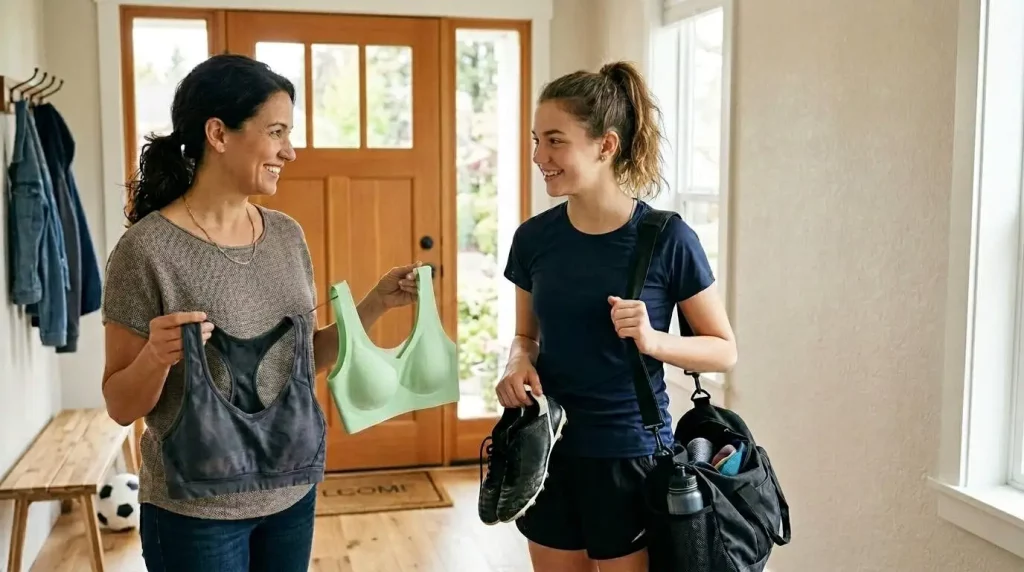
The hidden damage of bouncing (what’s really taking the hit)
Breasts are supported by skin, tissue, and internal support structures.
One set of internal supports is often called Cooper’s ligaments.
A sports bra can’t “fix” ligaments.
What it can do is reduce how much breast tissue moves during high-impact activity.
That matters because more movement is linked with more discomfort for many athletes.
Signs her sports bra is worn out (the real-life clues)
These are the signs moms notice first.
Band rides up
If the band climbs up her back, it’s usually too loose now.
This is a classic “time to replace” sign.
It feels like a loose hug
A sports bra should feel snug.
If it feels soft and loose, support is fading.
Straps slip a lot
If straps keep sliding, even after tightening, the straps may be stretched.
More bounce than last season
If she bounces more during warm-ups, the bra is not holding like it used to.
New rubbing or chafing
A worn band can shift.
Shift leads to rubbing.
Holes, frayed seams, elastic showing
That’s not “cosmetic.”
That’s the bra losing structure.
Smell that won’t wash out
When fibers wear down, stink can stick.
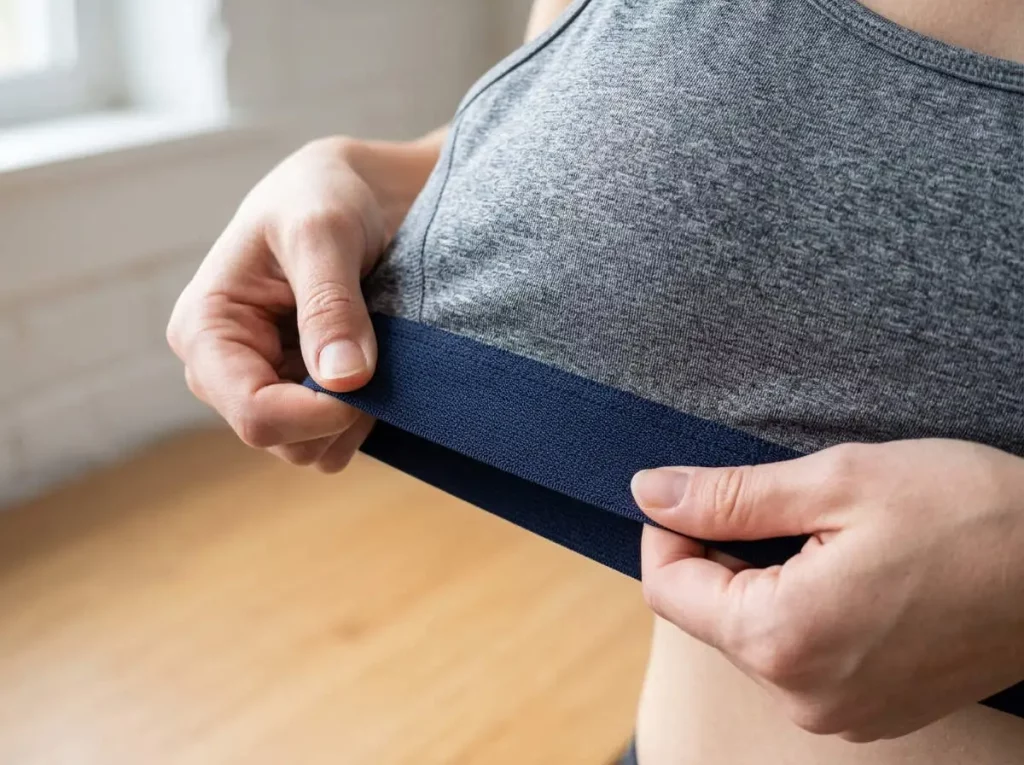
How to test elasticity in 60 seconds (mom + teen friendly)
Do these tests over a t-shirt if she prefers.
-
Arms-up test
Put the bra on.
Raise both arms overhead.
If the band slides up, the band is worn or the size is off.
-
Snap-back test
Gently pull the band out one inch.
Let go.
If it stays stretched, it’s tired.
-
Jump test
Do 10 jumping jacks.
If she has to hold her chest, or keeps adjusting the bra, support is not enough.
“But it looks fine” is common (support can drop before comfort does)
A big reason sports bras get reused too long:
They can still feel “okay.”
Support can still drop.
A peer-reviewed study tested a sports bra over 25 washes and found breast motion increased after washing and after wear + washing.
Key numbers from the abstract:
-
After washing: +20% side-to-side motion and +16% up-and-down motion.
-
After wear + washing: +32% side-to-side motion and +25% up-and-down motion.
Match the support level to her spring sport (track and soccer are not “light impact”)
Track and soccer include sprints, jumps, quick stops, and lots of repeated bounce.
That usually calls for high-impact support.
- If you want a simple next step, check out our High Impact Sports Bra
- If she’s dealing with soreness, our breast pain guide can help you sort what’s normal and what needs extra care.
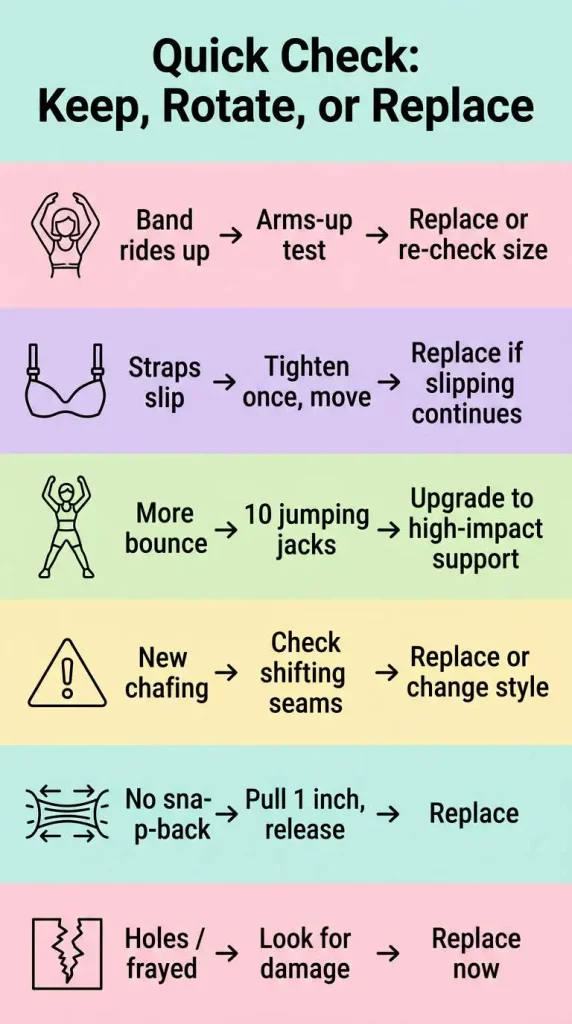
Quick infographic: keep it, rotate it, or replace it
Volcanica Bra spotlight (for high-impact spring sports)
If she’s Stage 3 (16–18) and headed into high-impact training, you want support that feels secure for a full practice.
High Impact Sports Bra: Volcanica Bra

FAQs
How long does a sports bra last?
It depends on how often she wears it and how it’s washed.
If it’s used for high-impact workouts and washed a lot, the elastic can wear faster.
Use the signs and the 60-second tests above.
What’s the fastest sign that support is gone?
The band riding up is one of the fastest tells.
If the band moves, support drops.
Can a worn-out sports bra cause breast pain?
It can be part of the picture.
Less support can mean more movement.
More movement is linked with more discomfort for many athletes.
If pain is strong, sudden, or keeps coming back, check with a clinician.
Should she wear the same sports bra for soccer and track?
Often yes, since both are high-impact.
Still, fit matters more than the label.
If she is adjusting it a lot during practice, it’s not the right one.
How can I help her choose the right support without making it awkward?
Make it about comfort and performance.
Try a quick test at home.
Let her tell you what feels better when she jumps and runs.