
Puberty can feel like something dads are “supposed” to leave to moms.
But most girls don’t need one perfect parent.
They need calm, steady support from the adults who love them.
If you’re a dad who wants to help without making it weird, this guide is for you.
Understanding puberty in girls (quick, normal, not scary)
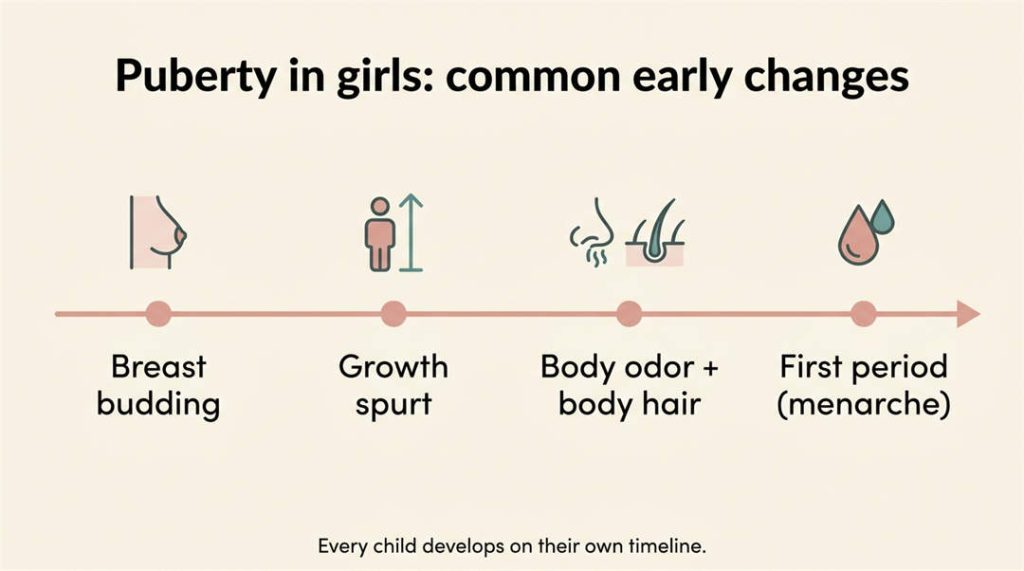
Most girls begin puberty somewhere between ages 8 and 13.
You may notice breast tenderness, a growth spurt, stronger body odor, mood changes, and eventually a first period.
Step-by-step: How dads can support daughter puberty (without overstepping)
You don’t need a big “talk.”
You need a plan that keeps things respectful, practical, and low-pressure.
Step 1: Set the tone (calm + private)
A calm tone makes puberty feel normal.
Privacy makes your daughter feel safe.
Knock before entering her room.
Avoid bringing up body changes in front of siblings.
If she looks uncomfortable, don’t push, just keep the door open.
Step 2: Use simple, repeatable scripts
A short script is easier than a long conversation.
It also gives your daughter a way to say “not right now” without drama.
Try one of these lines.
-
“Growing up comes with changes.
If anything feels confusing, you can ask me.” -
“If you’d rather talk to Mom, that’s fine.
I can still help with practical stuff.” -
“If you want questions to stay private, they will.”
If you want straightforward, teen-friendly wording, Planned Parenthood has a clear puberty overview.
Step 3: Make the supply run normal
One of the easiest ways to support your daughter is to help her get what she needs without spotlighting it.
A simple line works.
“I’m heading to the store.
Text me what you want me to grab.”
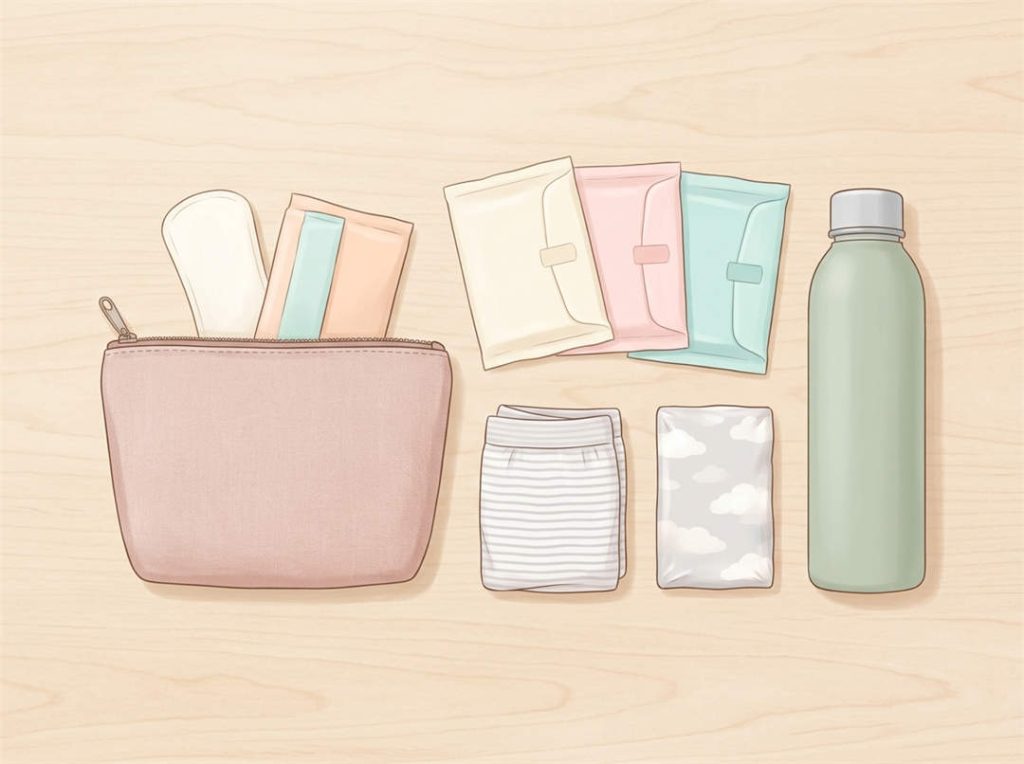
You can also quietly keep a basic starter kit at home for the first surprise.
Step 4: Help with first bras (keep it about comfort, not her body)
Bra shopping can feel awkward for dads.
The easiest fix is to focus on comfort and function.
You can ask things like:
Does anything feel itchy.
Does anything feel tight.
Do straps slip.
Is it annoying during PE.
If you want cues that puberty may be starting, this article can help you spot early signs.
learn the first signs of puberty
For sizing, keep it simple and practical.
This step-by-step page walks parents through measuring:
check our training bra size guide
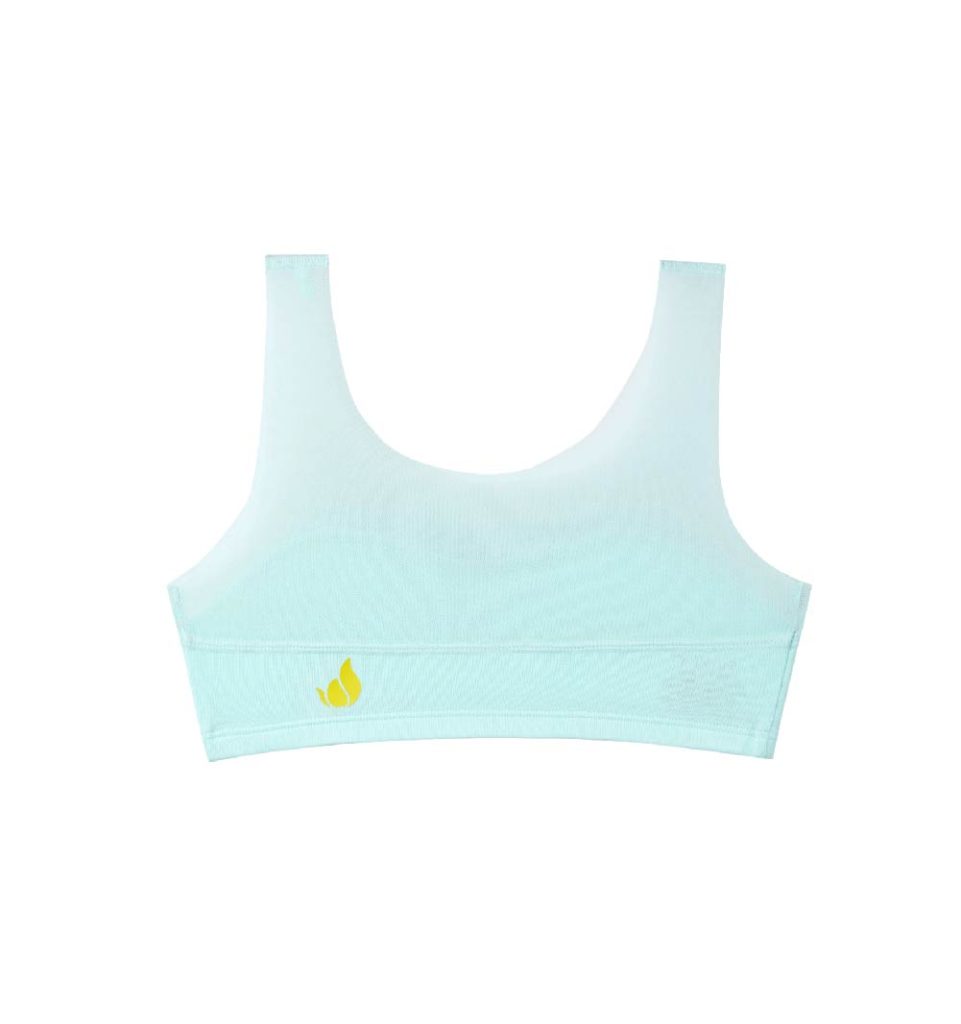
Suyiyi bras are designed in stages because bodies change fast during puberty.
Stage 1 is usually best for early development and light coverage.
If your daughter is just getting started, you can browse beginner-friendly options here:
shop Stage 1 bras for early development
Step 5: Keep the “aftercare” easy (bra care)
A lot of girls worry a new bra will feel “weird” after a few washes.
Helping it stay soft is an easy dad win.
If you do laundry at home, ask once:
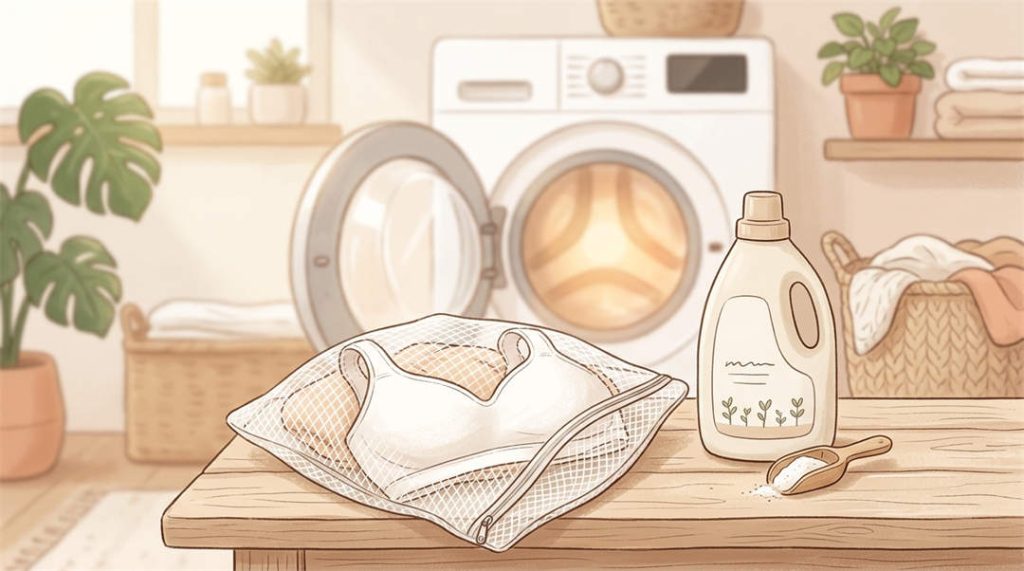
“Want me to wash these in a mesh bag so they stay comfy?”
Here’s our quick guide:
read our bra care tips for longer-lasting comfies
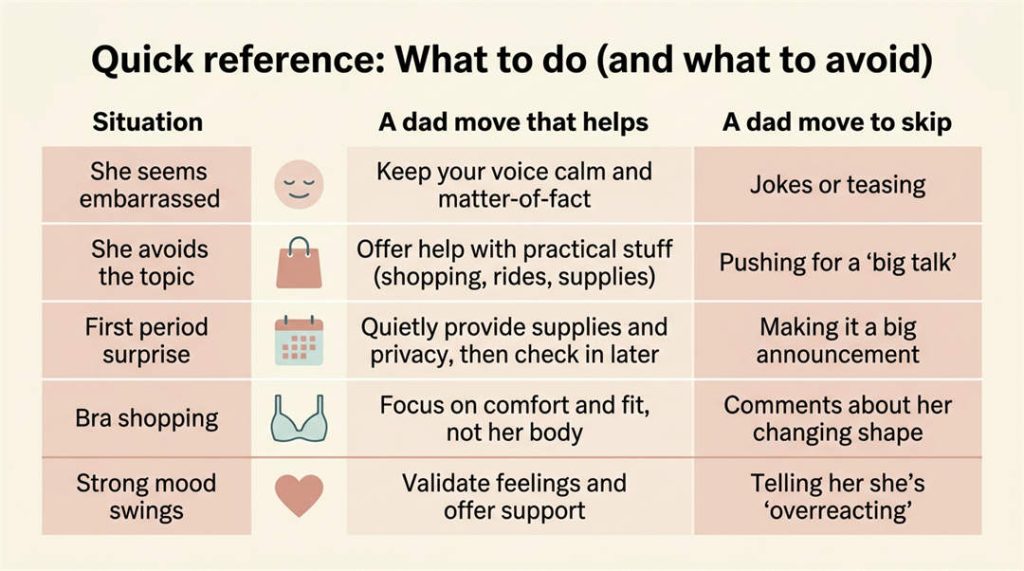
Quick reference: What to do, and what to avoid
This isn’t about being perfect.
It’s about being steady.
When to call the pediatrician
Most puberty changes are normal.
Sometimes a quick check is the right move.
Talk with your pediatrician if you notice breast changes before age 8, no breast budding by age 13, very heavy bleeding, or pain that keeps her home from school.
If mood changes feel intense for weeks (not just a rough day or two), that’s also worth discussing.
FAQs
What age do girls usually start puberty?
Many girls start changes between 8 and 13.
Some start earlier, some later, and a wide range can still be normal.
Johns Hopkins Medicine notes puberty stages can start around age 8 and breast budding is often the first sign.
What if my daughter won’t talk to me about puberty?
Keep the door open with short, low-pressure check-ins.
Offer help with practical things like shopping or supplies.
Remind her she can choose who she talks to.
What’s the easiest way to help with period supplies?
Make it a normal store run.
Ask her to text a list.
Keep a small backup kit at home so she never has to scramble.
About Suyiyi (Tweenbra.com)
Suyiyi makes stage-based bras for tweens and teens, with a focus on comfort, safe materials, and body-positive confidence.
Our goal is to support families through puberty with practical guidance and products that feel good to wear.