
Stretch marks puberty normal? Almost always, yes – and that answer matters more than you’d think when your tween is standing in front of the mirror pulling at her T-shirt. Nobody announced these changes. Now she’s got questions she’s half-embarrassed to ask.
Here’s the real talk, plus what to say when she finally does.
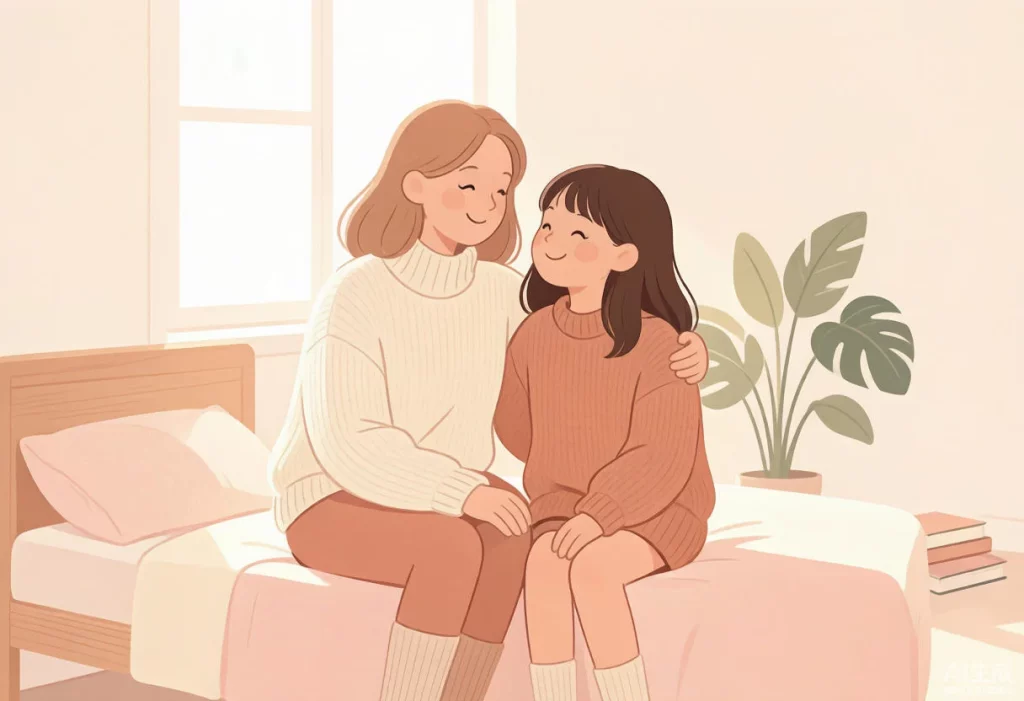
What Stretch Marks Actually Are
Stretch marks are small lines in the skin. Doctors call them striae. They show up when the body grows quickly and the skin stretches faster than it can keep up.
At first they can look pink, red, purple, or darker than the skin around them. Later they usually fade to silvery, light, or close to her natural skin tone. They’re harmless and don’t need treatment, even though the internet will happily sell you a cream that says otherwise. According to DermNet, a trusted skin-health resource, stretch marks affect roughly 70% of adolescent girls and 40% of adolescent boys.
You’ll most often spot them here:
- Thighs and calves
- Hips and bottom
- Breasts
- Stomach and lower back
- Upper arms and shoulders
One study of 157 healthy students ages 15 to 17 found that 131 of them – about 83% – had stretch marks, with the average starting age around 13.8. Most weren’t painful or itchy by the time researchers looked at them.
So when she whispers, “Why do I have lines on my thighs?” the honest answer is: because she’s growing. Not because she did something wrong.
Why “Weird” Is Usually Just “Normal, Earlier”
Puberty has a very wide normal range. Most girls start somewhere between ages 8 and 13, which means two kids in the same fifth-grade class can be years apart in development and both be perfectly on track.
What makes bodies feel “weird” isn’t usually the change itself. It’s the timing. A girl who grows first feels too big. A girl who grows last feels behind. Both feel wrong, and neither is.
That gap shows up in the research, too. A four-year study of 1,370 adolescents found that kids who felt “late” next to their friends were more likely to feel unhappy with their bodies. Another study of 304 students linked body dissatisfaction in girls to appearance talk among friends and constant comparison.
Translation for us: the comparison is doing more damage than the body. Cutting down on “she’s so much taller than you” talk at home is not a small thing.
The Changes Nobody Announces
Stretch marks get the most attention, but they’re rarely the only surprise. Breasts can start as small, tender bumps under one or both nipples – breast buds – and one side often gets going before the other. That unevenness is common and usually evens out with time.
Then there’s body hair under the arms and around the private area, more sweat, stronger body odor, oily skin, acne, hips widening, and clear or white discharge before periods start. All of it lands without any warning letter.
Broad shoulders are another one. A seven-year growth study found that girls’ shoulder width changed right along with the rest of puberty, with the fastest shoulder-width growth happening about 18 months before the first period, on average. Broad shoulders aren’t a boy thing or a girl thing. They’re a bone-shape thing, a family-trait thing, and sometimes a swim-team thing.
The awkward phase has a pattern, too: hands and feet often grow first, then arms and legs seem extra long, and the torso catches up later. Knowing the order helps you say, “Your body isn’t finished yet,” and actually mean it.
A Mom Script for the “Is This Okay?” Moment
You don’t need perfect words. You need a calm face and a short answer, because a long lecture reads as panic.
Say something like this:
- “Lots of kids get stretch marks when they grow fast.”
- “One breast growing faster than the other is common.”
- “You can ask me about body stuff anytime. You won’t get in trouble.”
- “You don’t have to love every change today. You do deserve to be kind to your body.”
- “Your body isn’t supposed to copy anyone else’s body.”
Skip these, even when they’re meant kindly:
- “Don’t worry about it,” followed by a fast subject change.
- “At least you’re not as big as—”
- “You should cover that up.”
- “You’d get fewer marks if you lost a little weight.”
- “You’ll grow out of looking awkward.”
That last one sounds reassuring. It isn’t. It tells her the current version of her body is a problem she has to wait out.
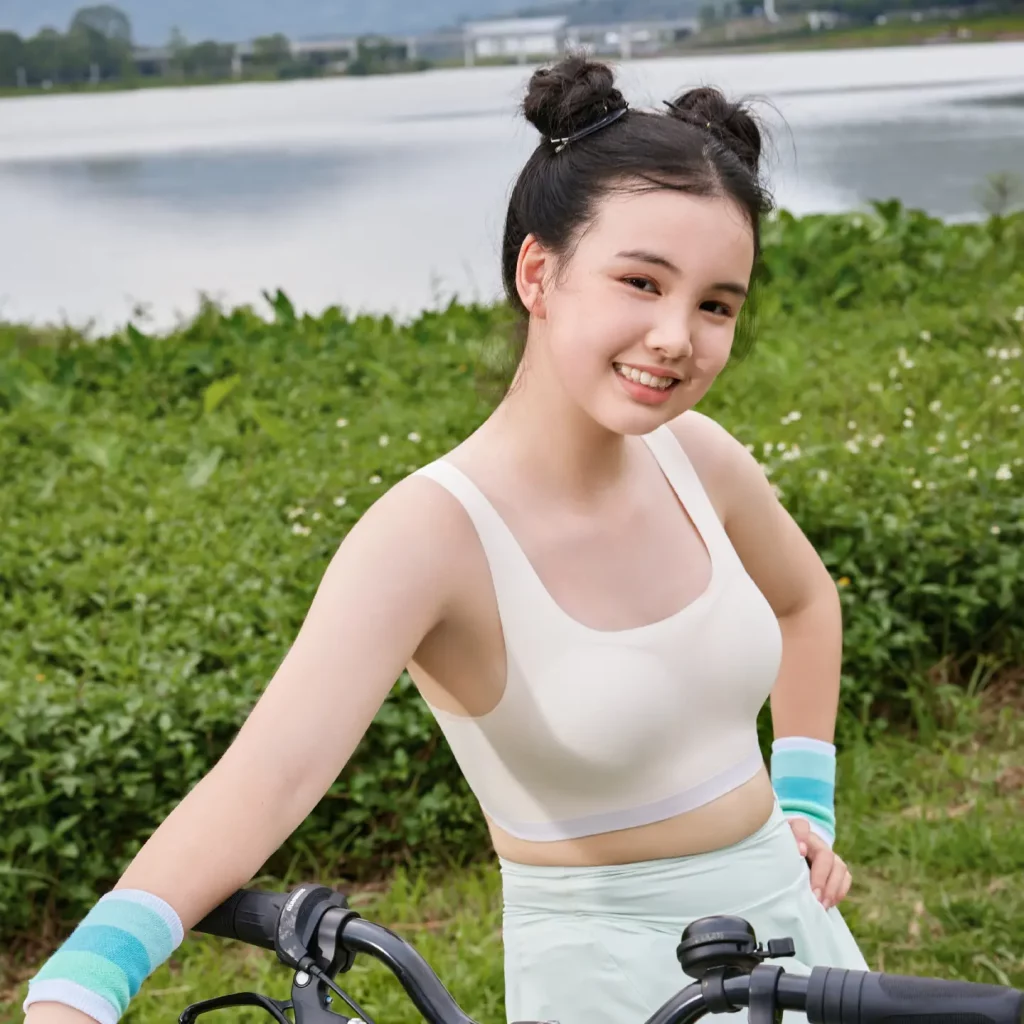
Comfort Counts More Than Covering Up
No cream has been proven to erase stretch marks. Moisturizer can help skin feel softer or less itchy, and that’s about it. Puberty stretch marks usually fade on their own.
What does help is boring, steady comfort:
- Gentle soap, nothing harsh
- Plain moisturizer if her skin feels dry or itchy
- Soft clothes that feel good against her skin
- A comfortable first bra if breast growth makes PE or school clothes feel awkward
- Skipping any “miracle” product that promises to erase marks
- Talking openly about social media filters and edited photos
That bra piece matters more than it sounds. A soft, wire-free training bra isn’t about hiding her body — it’s about letting her move in class, at practice, and under a T-shirt without wincing. If you’re not sure where to start, our best training bras for 8-9 year olds guide walks through the early stages, and Suyiyi’s stage-based approach gives growing bodies different levels of comfort as they change.
Body comfort and body confidence are tied together. If she’s spiraling about how she looks, our guide to body image during puberty goes deeper on the language that helps.
When a Change IS Worth a Check-In
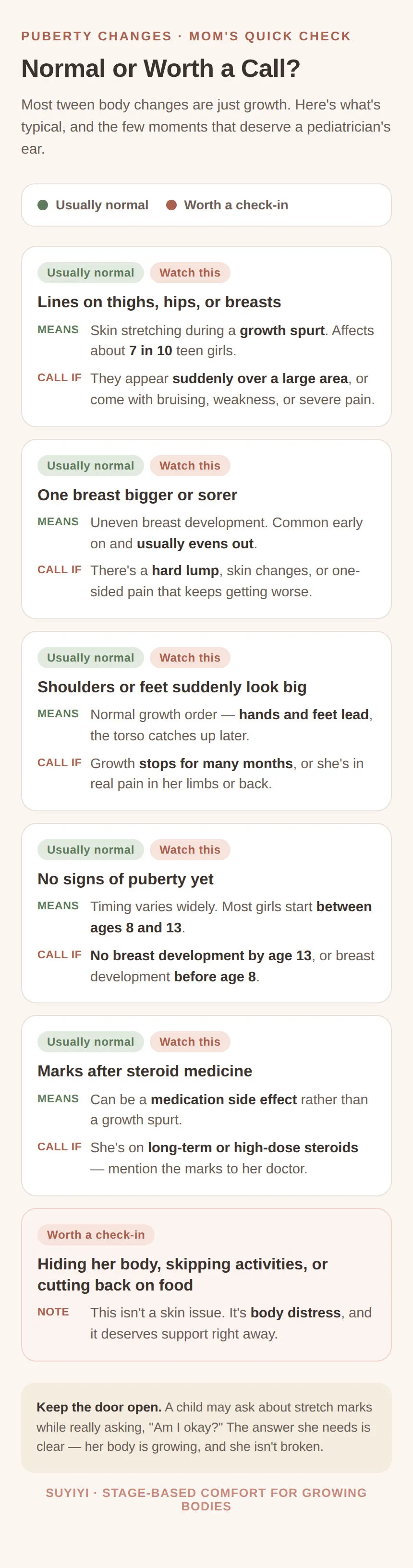
Most of this is normal. Some of it deserves a call. The graphic below is the quick version, built to read on a phone — one card per change, no squinting.
One more from the data, because it’s easy to miss: a long-term study following 822 girls from ages 6 to 8 found that earlier breast development was linked with more anxiety and depression symptoms in some groups. That’s not a reason to panic. It’s a reason to keep talking and to ask for help early if she seems really worried or sad.
FAQ
Are stretch marks during puberty permanent?
They rarely disappear completely, but they almost always fade. Fresh marks look pink, red, or purple, and over months they typically lighten to silvery or close to her skin tone. Most become much harder to notice with time.
Do stretch marks mean my daughter is gaining too much weight?
No. Stretch marks show up during fast growth, and growth spurts change height, hips, breasts, and muscle — not just weight. Plenty of kids who eat well and play sports get them. Tying stretch marks to weight is a fast way to make her feel like her body is a problem to fix.
Will moisturizer or creams get rid of them?
Moisturizer can soften skin and ease itching. Nothing has been proven to prevent or erase stretch marks, so save your money on products that promise a miracle. Time does more than any cream.
Why is one breast bigger than the other?
Breast development often starts on one side first. Soreness and uneven size are common in early puberty and usually even out as development continues. A pediatrician can take a look if there’s a firm lump, skin changes, or pain that keeps building.
Are broad shoulders normal for girls?
Yes. Shoulder width changes during puberty for girls, and bone shape and family traits play a big part. Swimming, dance, and other sports build the upper body, too. There’s no single correct puberty body.
When should I call the pediatrician about stretch marks?
Call if the marks appear very suddenly over a large area, come with unusual bruising, weakness, or severe pain, or start after steroid medicine. Also call if she’s hiding her body, skipping activities she used to love, or cutting back on food. That last part is about her mental health, not her skin.
What if she won’t talk to me at all?
Keep the door open without forcing it. Short, low-pressure comments land better than sit-down talks – in the car, while making dinner, after a school event. If she’s shutting down or seems really down, a pediatrician or counselor can help carry the conversation.