
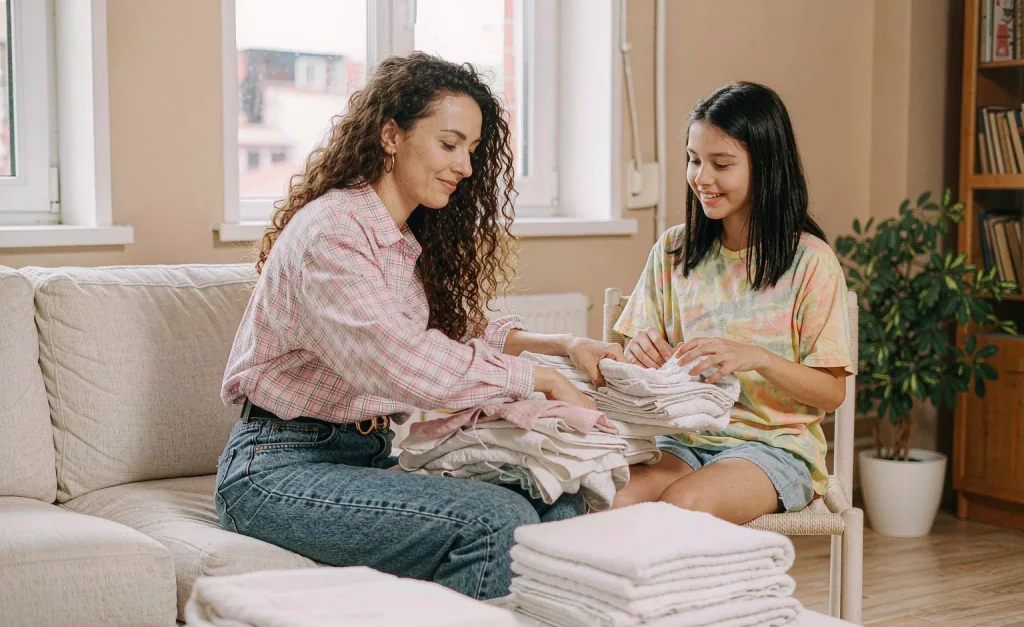
The other day, my daughter asked me a question about her body while I was folding laundry. My heart skipped – I had no script ready. Knowing how to talk to daughter about puberty body changes without shame is something every mom wishes she’d been taught.
Why the “Big Talk” Doesn’t Work (and What Does)
A sit-down lecture about puberty usually makes both of you freeze. Try tiny chats that feel like real life instead – you’re not giving a speech, you’re just being her safe person.
Start Before She Asks – Plant Seeds Early
Most girls start puberty between ages 8 and 14. If you wait until she comes to you, she may already feel too shy, so plant seeds early with a short, calm sentence at a normal moment.
You might say breasts can start as small bumps under the nipple and feel a little sore, or that one side may grow before the other – that’s how it works for a lot of girls. Hair under the arms is one of the first changes puberty brings.
The 3-Minute Daily-Life Opener
You don’t need a long sit-down. A three-minute chat in the car, while brushing hair, or before bed works better — because it feels normal, not like “a talk.”
Try this script:
“Hey – I read something about how girls’ bodies start changing around your age. What have you noticed so far?”
Pause. Wait. Don’t fill the silence. If she says “nothing,” try:
“Cool. I just want you to know that if anything feels weird or confusing, you can ask me. I probably won’t be perfect, but I’ll try to be honest.”
That last line matters. It lowers the bar and tells her you don’t have to be perfect to be her safe person.
Words That Build Body Trust (and Words That Shut It Down)
The way you talk about your own body is the biggest puberty curriculum in your house – your daughter is listening, even when you think she isn’t.

Skip the lines about being fat, hating your thighs, telling her to cover up, or saying she looks better when she’s thinner. Even jokes land deep, and if you’ve slipped, it’s not too late to repair.
A 2025 review of body-image research found that family body talk is one of the strongest predictors of how a daughter feels about her own body – even into adulthood.
Swap in phrases that remind her bodies come in many shapes and sizes, and that her body helps her run, laugh, hug, and think. Growing can feel strange – her body’s just doing its job, she gets to decide what feels good on her body, and she can always tell you if something feels off.
Inviting Questions Without Pressure
Some girls ask a hundred questions. Some say “I’m fine” and walk away, and both are okay. Your job isn’t to make her talk – it’s to keep the door easy to open.
If face-to-face feels hard, try a “question box.” A small notebook on the kitchen counter can work wonders – she writes a question, drops it in, and you answer it privately with no eye contact or awkward pause.
Before you launch into a fix, ask: “Do you want me to just listen, or do you want ideas?” That one question gives her respect and keeps you from being the mom who always lectures.
When Her Body Changes Faster Than Her Words
Sometimes a daughter notices a change before she has any words for it. She might say, “My chest looks weird,” or she might not say anything and just start wearing baggier shirts. That’s a cue, not a crisis.
You can ask: “I’ve noticed you’ve been reaching for bigger shirts lately – want to tell me what’s going on?”
If she wants more coverage or support, you can offer a soft training bra without making it a big event. If you’re wondering when to bring it up, our guide on When Do Girls Need Training Bras is a calm place to start.

A first bra is just clothing — not a milestone that makes her “all grown up.” If she wants help picking one, our First Bra Fitting Tips can make the moment feel easy for both of you.
When Puberty Brings Big Feelings
Puberty isn’t just a body thing. It’s a feelings thing, and your daughter may cry more, snap more, want more privacy, or feel anxious about fitting in. Try: “Your feelings are real – let’s figure out what you need right now.”
Build a small “feel better” list with her. A few simple options:
- Take a walk
- Listen to music
- Talk to a safe adult
- Ask for a hug
- Step away from social media for a bit
- See a doctor if sadness feels really big
The CDC’s 2023 Youth Risk Behavior Survey found that 53% of U.S. female high school students had felt persistently sad or hopeless in the past year. That’s a strong reason to keep the door open and ask for help early when something feels really off.
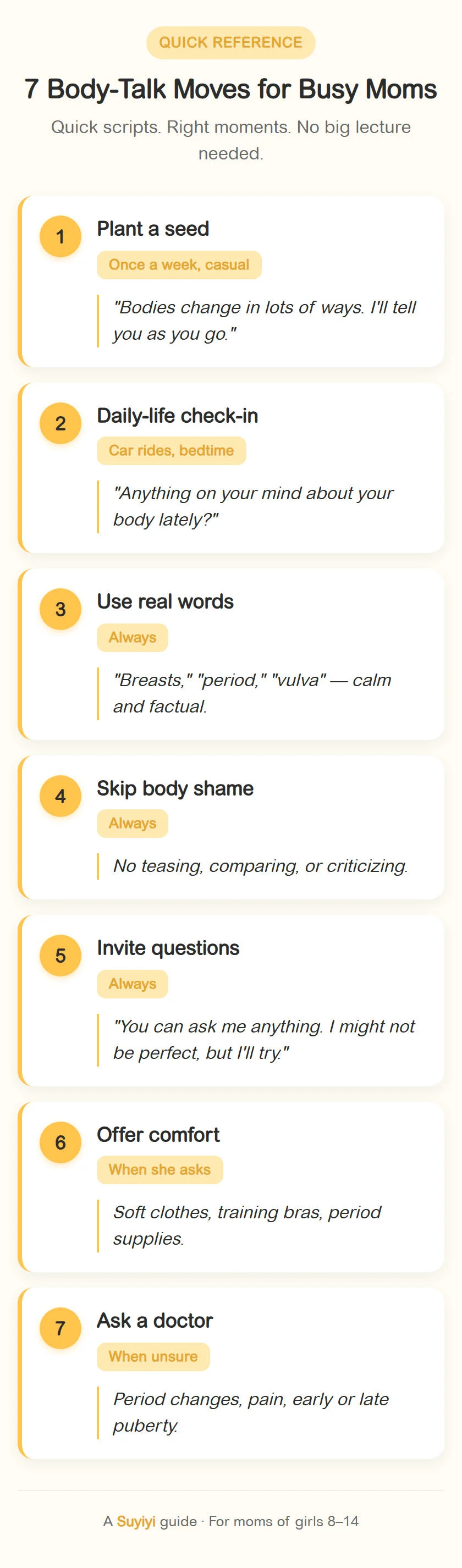
A Quick Body-Talk Plan for Busy Moms
FAQ
How do I start the puberty talk if my daughter hasn’t asked anything yet?
You don’t need a sit-down. A three-minute chat while doing dishes or driving to school works – try one small fact, like “your body might start changing soon, and that’s normal.” If she says nothing, that’s fine. The seed is planted.
What if I freeze or say the wrong thing?
It happens, and just repair. Say, “I said that wrong – what I meant was…” Your daughter doesn’t need a perfect mom; she needs a real one. Most moms find that honest follow-up talks help more than one polished talk.
When should I bring up a first bra?
If she’s asking for more coverage, complaining about soreness, or wanting one for sports, it’s time. Don’t make it a milestone – a soft training bra is just comfortable clothing.
My daughter is 8 and showing early signs. What should I do?
Call your pediatrician. Puberty can start that early for some girls and still be normal, but a doctor can rule out precocious puberty and give you a plan. Keep your tone calm at home, use real words, and don’t make her feel different.
What if her dad is the one having the talks?
That’s great. Dads, stepdads, and other safe adults all matter, and the script is the same: short, calm, factual, and full of respect. Many daughters prefer asking a same-gender parent, but many also love having a second safe person.
Should I worry about social media?
Yes, but don’t panic. Ask her how certain accounts make her feel, talk about filters and editing, and help her curate her feed. The Mental Health Foundation found that 46% of girls say body image makes them worry “often” or “always” – and that the words people around them say matter a lot.